Showing posts with label Indian railways. Show all posts

Wednesday, November 20, 2013

INTERNATIONAL FACTS


India Facts 
  • India is officially known as the Republic of India.
  • India has the second largest population in the world, with over 1.2 billion people
    (1,205,073,612 as of July 2012).
  • India is the seventh largest country by total area.
  • India belongs to the continent of Asia, it is bordered by the countries of Bangladesh, Bhutan, Burma, China, Nepal, and Pakistan.
  • The highest mountain in India is Kanchenjunga, standing at 8,598m (28,209 ft), which it shares with Nepal. Kanchenjunga is the third highest mountain in the world.
  • Many different languages are spoken in India. The main ones are Hindi, Bengali, Telugu, Marathi, Tamil, and Urdu.
  • The capital city is New Delhi, while the most populated city is Mumbai. Other major cities include Kolkata, Chennai and Bangalore.
  • Because of India's location, it experiences periods of heavy rain called Monsoon.
  • The Taj Mahal (a famous mausoleum and popular tourist attraction) is located in the region of Agra.
  • India became an independent nation in 1947 after ending British rule that began in 1858.
  • Mahatma Gandhi is famous for the important part he played in gaining India's independence.
  • Once British rule was over, India was split into the Republic of India and the Islamic Republic of Pakistan. Later, an area between India and Pakistan became the People's Republic of Bangladesh.
  • The national symbol of India is the endangered Bengal Tiger.
  • The most popular sport in India is cricket, with the Indian team being the first to win the Cricket World Cup on home soil when they were victorious in 2011.
  • India hosted the 2010 Commonwealth Games in Delhi, but has never hosted the Olympic Games.
 Australia Facts

  • As of 2012, Australia has an estimated population of over 22 million people.
  • Australia is the world's 6th largest country by area.
  • Due to its large size and isolation from the rest of the world, Australia is sometimes known as the ‘island continent’.
  • The largest cities in Australia are Sydney, Melbourne, Brisbane, Perth and Adelaide.
  • A desert area known as the ‘outback’ covers much of the land.
  • The name ‘Australia’ comes from the Latin word ‘australis’, meaning southern.
  • It is estimated the humans have lived in Australia for around 45000 years.
  • The indigenous people of Australia are Australian Aborigines and Torres Strait Islanders.
  • The highest mountain on mainland Australia is Mt Kosciuszko, standing 2228m (7310ft) above sea level.
  • The world's largest reef system, the Great Barrier Reef, is found off the north-eastern coast of Australia.
  • Australia has a range of different landscapes, including urban areas, mountain ranges, deserts and rain forests.
  • Australia is home to a variety of unique animals, including the koala, kangaroo, emu, kookaburra and platypus.
  • Although they usually keep to themselves, there are a range of dangerous snakes in Australia, such as the Brown Snake, Tiger Snake and Taipan.
  • Australia has over 750 different reptile species, more than any other country in the world.
  • Australia is a relatively wealthy country with a high life expectancy.
  • Australia hosted the 1956 (Melbourne) and 2000 (Sydney) Summer Olympics.

 
 Brazil Facts

  • Brazil is the largest country in South America.
  • The name Brazil comes from a tree named brazilwood.
  • It is called Brasil in Portuguese, the official language spoken in Brazil.
  • Brazil is the only country in South America that speaks Portuguese.
  • Portugal claimed the land of Brazil in the year 1500. Independence was declared in 1822.
  • Brazil is the 5th largest country in the world by both land area and population.
  • The population in 2012 was around 194 million people.
  • The capital city is Brasilia, while the largest city is Sao Paulo.
  • Other major cities include Rio de Janeiro, Salvador and Fortaleza.
  • In Brazil they drive on the right-hand side of the road.
  • Brazil has a large coastline on the eastern side of South America, stretching 7491 kilometres (4655 miles) in length.
  • Brazil shares a border with all South American countries except for Chile and Ecuador.
  • Brazil covers 3 time zones.
  • Brazil has one of the largest economies in the world.
  • Brazil is one of the 77 founding members of the United Nations.
  • The Amazon River flows through Brazil, it is the 2nd longest river in the world (after the Nile).
  • Around 60% of the Amazon Rainforest is located in Brazil.
  • The climate in the majority of Brazil is tropical.
  • Brazil is home to a wide range of animals, including armadillo, tapirs, jaguars and pumas.
  • Human activities such as logging, mining fishing and agriculture are important to the Brazilian economy but are also a serious threat to Brazil's diverse environment.
  • Millions of tourists visit Brazil every year.
  • There are around 2500 airports in Brazil.
  • Football (soccer) is the most popular sport in Brazil with the national team consistently among the best in the world, winning the World Cup a record 5 times.

 Canada Facts

  • In 2012 the population of Canada was around 35 million.
  • The capital city of Canada is Ottawa.
  • Major cities include Toronto, Montreal, Vancouver, Edmonton and Calgary.
  • The 2 main languages spoken in Canada are English and French.
  • Canada is the second largest country in the world by total area (Russia is the largest).
  • Canada is made up of 10 provinces and 3 territories.
  • Canada features the longest coastline in the world, stretching 202080 kilometres (125570 miles).
  • Canada shares the longest land border in the world with the United States, totaling 8891 kilometres (5525 miles).
  • The name Canada comes from the word ‘kanata’ which means ‘settlement’ or ‘village’ in the language of the indigenous St Lawrence Iroquoians.
  • Canada has over 30000 lakes.
  • Winters can be very cold in Canada with temperatures dropping below −40 °C (−40 °F) in some parts of the country.
  • Canada is rich in resources such as zinc, nickel, lead and gold.
  • The most popular sport in Canada is ice hockey.
  • Calgary hosted the 1988 Winter Olympics, Vancouver the 2010 Winter Olympics and Montreal the 1976 Summer Olympics.
  • The maple leaf is a Canadian symbol and features prominently on the national flag.


    China Facts


  • China is officially known as the People's Republic of China.
  • China has the largest population in the world, with over 1.3 billion people (1,343,239,923) as of July 2012.
  • China is the 3rd largest country by area at 9,706,961 sq km (3,747,879 sq miles).
  • China belongs to the continent of Asia. Bordering countries include Afghanistan, Bhutan, Burma, India, Kazakhstan, North Korea, Kyrgyzstan, Laos, Mongolia, Nepal, Pakistan, Russia, Tajikistan, and Vietnam.
  • The summit of Mt Everest marks the border between China and Nepal.
  • There are many different languages spoken in China, including Mandarin, Yue, Wu, Minbei, Minnan, Xiang, Gan and Hakka.
  • The capital city is Beijing, while the most populated city is Shanghai. Other major cities include Chongqing, Shenzhen and Guangzhou.
  • 47% of the population live in urban areas.
  • China experiences typhoons every year and also suffers from floods, tsunamis, earthquakes and droughts.
  • China has the fourth longest river in the world, the Yangtze River, which reaches 5,797km (3,602 miles) in length. It also has the sixth longest, the Yellow River, stretching 4,667km (2,900 miles).
  • China is the second largest economy in the world, after the United States of America.
  • In 2003, China became the third country to successfully send a person to space.
  • The Great Wall of China is the largest man made structure in the world, stretching an incredible 8,850 kilometres (5,500 miles).
  • The famous Giant Panda is found near the Yangtze River in China.
  • China hosted the 2008 Summer Olympic Games in Beijing.

  
Egypt Facts

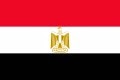
  • Egypt is officially known as the Arab Republic of Egypt.
  • In 2012, the population of Egypt was just over 83 million (83,688,164).
  • Egypt is bordered by the Gaza Strip, Israel, Libya and Sudan as well as the Mediterranean Sea and the Red Sea.
  • The Sinai Peninsula in Egypt spans across two continents, Africa and Asia.
  • Mount Catherine is the highest mountain in Egypt, standing 2,629m high (8625 ft).
  • The official language of Egypt is Arabic, but others languages such as English and French are also understood by many.
  • The capital city is Cairo, which also has the largest population. Other major cities include Alexandria and Giza.
  • Egypt is a very dry country. The Sahara and Libyan Desert make up most of the area of Egypt.
  • Egypt experiences natural hazards such as droughts, earthquakes, flash floods, landslides, windstorms (called khamsin), dust storms and sandstorms.
  • The longest river in the world, the Nile, runs through Egypt.
  • Egypt is famous for its ancient civilization, the Ancient Egyptians, who date back to around 3150 B.C.
  • Egypt is home the Great Pyramid of Giza, one of the Seven Wonders of the Ancient World.
  • The most popular sport in Egypt is football (soccer).
  
England Facts


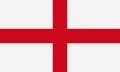
  • England is the most populated country in the United Kingdom. The other countries that make up the United Kingdom are Wales, Scotland and Northern Ireland.
  • England is bordered by Wales to the west and Scotland to the north.
  • The population of England in 2011 was around 53 million.
  • The capital city of England is London. Other major cities include Birmingham, Manchester, Sheffield, Liverpool, Newcastle and Leeds.
  • England includes many small islands such as the Isle of Wight and Hayling Island.
  • There is only a 34 kilometre (21 mile) gap between England and France and the countries are connected by the Channel Tunnel which opened in 1994.
  • England was the first industrialized nation after the industrial revolution that began around 1760.
  • Famous English scientists include Charles Darwin, Michael Faraday, Isaac Newton and Stephen Hawking among many others.
  • The longest river in the United Kingdom is the River Severn. Located in England and Wales, it stretches around 354 kilometres (220 miles) in length.
  • The longest river found entirely in England is the River Thames, it flows through London and is slightly shorter than the River Severn at around 346 kilometres (215 miles) in length.
  • The largest lake in England is named Windermere.
  • The highest mountain in England is Scafell Pike, which stands at around 978 metres (3,209 ft) in height.
  • England has a large economy and uses the pound sterling as its currency.
  • English computer scientist Tim Berners-Lee is credited with inventing the World Wide Web.
  • There have been a number of influential English authors but perhaps the most well known is William Shakespeare, who wrote classics such as Romeo and Juliet, Macbeth and Hamlet.
  • Football (soccer) is the most popular sport in England but others such as cricket and rugby have large followings.
  • The Summer Olympic Games have been held in London 3 times, in 1908, 1948 and 2012.
  • The official London home of the British monarch (king or queen) is Buckingham Palace.
 
France Facts


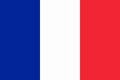
  • France is officially known as the French Republic.
  • The name France comes from the Latin word Francia, which means 'country of the Franks'.
  • French Guiana, Guadeloupe, Martinique, Mayotte, and Reunion are also recognized as a part of France.
  • In 2012, the population of mainland France was just under 63 million (62,814,233). Another 2.8 million (2,816,459) are split between French Guiana, Guadeloupe, Martinique, Mayotte and Reunion.
  • Mainland France belongs to the continent of Europe. Bordering countries are Andorra, Belgium, Germany, Italy, Luxembourg, Monaco, Spain, and Switzerland.
  • The Alps mountain range on the border of France and Italy is home to France’s highest mountain, Mont Blanc, which stands at 4,807m high (15,771 ft).
  • The official language is French.
  • French is the second most studied language in the world after English.
  • The capital city is Paris. Other major cities include Marseille, Lyon, Lille, and Nice-Cannes.
  • France is the most visited country in the world, with over 80 million visitors every year.
  • The Louvre is the most visited art museum in the world. The famous Mona Lisa painting is on display in this museum.
  • During World War II, Allied forces landed on the beaches of Normandy in northern France. The first day of these landings is called D-Day.
  • The famous Eiffel Tower in Paris was built as the entrance point for the 1889 World Fair. It is one of the most visited monuments in the world.
  • The Millau Bridge in southern France is the world's tallest bridge and France's tallest structure. At its highest point, it stands 343m (1125 ft) above the ground.
  • France was the second country to host the modern Olympic Games in 1900 in Paris. Paris also hosted the games again in 1924. Three winter Olympics have been hosted in France.
  • The most famous road bicycle race in the world, the Tour de France zig zags through the French landscape.
  • One of the four grand slam tennis events, the French Open, is held in Paris every year.
  • Louis Pasteur was a French scientist who made many discoveries in the fields of chemistry and microbiology.
 
Germany Facts


  • The name for Germany in the German language is Deutschland.
  • The population of Germany was around 82 million in 2010.
  • The capital of Germany is Berlin, it is also the largest city.
  • Other major cities include Munich, Hamburg, Cologne, Stuttgart and Frankfurt.
  • Germany is a member of the European Union.
  • Germany has had an unsettled history, including the Nazi regime and tension between East and West Germany (which were reunified in 1990).
  • Countries that border Germany include Belgium, the Netherlands, Denmark, Austria, the Czech Republic, France, Luxembourg, Poland and Switzerland.
  • Germany has the largest economy in Europe.
  • Large German companies include BMW, Adidas, SAP, Mercedes-Benz, Nivea, Audi, Bayer, Volkswagen and Siemens.
  • Germany has a number of important natural resources, including copper, nickel, natural gas, uranium and coal.
  • Germany is in the process of phasing out nuclear power plants.
  • There are many national parks in Germany include the Bavarian Forest National Park, Jasmund National Park, Harz National Park, and the Wadden Sea National Parks among others.
  • Over 100 Germans have been awarded the Nobel prize in their field, including Albert Einstein, who was born in Germany.
  • Germany has been home to famous composers such as Johann Bach, Ludwig van Beethoven and Richard Wagner.
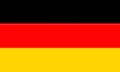
  • The German coat of arms features a black eagle against a yellow shield.
  • Football (soccer) is the most popular sport in Germany.
  
 
Greece Facts


  • The official name of Greece is the Hellenic Republic.
  • Greece is located in southeast Europe, close to both Africa and Asia.
  • In 2011 the population of Greece was around 11 million.
  • The capital and largest city in Greece is Athens. Other major cities include Thessaloniki, Patras and Heraklion.
  • Around two thirds of the Greek population live in urban areas.
  • Greek is the official language spoken in Greece.
  • Greece is a member of the European Union and uses the Euro as its currency.
  • Greece is a developed country with a high standard of living. Important industries include the service sector, agriculture and tourism.
  • Greece is a popular tourist destination and home to over a dozen World Heritage Sites.
  • Greece features thousands of islands, including destinations such as Santorini and Mykonos.
  • Greece is one of the most mountainous countries in Europe.
  • The highest mountain in Greece is Mount Olympus, it has over 50 peaks with the highest reaching 2917 metres (9570 feet).
  • Ancient Greece is said to have laid the foundation for Western civilization, having a large influence on the Roman Empire and European culture.
  • The Olympic Games originated in Ancient Greece.
  • Athens most recently hosted the Summer Olympic Games in 2004.
  
 
Italy Facts


  • Italy is officially known as the Italian Republic.
  • Vatican City and San Marino are very small independent states located inside Italy.
  • Campione d'Italia is part of Italy but located within the borders of Switzerland.
  • Italy belongs to the continent of Europe. Countries that border Italy are Austria, France, Vatican City, San Marino, and Switzerland.
  • Rome is the capital city of Italy. Other major cities include Milan, Naples, Turin, and Palermo.
  • Rome was the home to the Ancient Romans, a civilization that grew into a huge empire. Western civilization as we know today is based on many Ancient Roman principles.
  • Italy has many earthquakes and volcanoes due to the conflict between the Eurasian and the African tectonic plates. The volcanoes Etna and Vesuvius are a constant danger to humans due to their closeness to big cities.
  • Over 61 million people live in Italy (61,261,254) as of 2012.
  • Italy was the birthplace of the Renaissance, which was a period of great cultural achievements in poetry, painting and architecture. Famous artists such as Michelangelo, Raphael, Donatello, and Leonardo Da Vinci were part of the Renaissance.
  • Italian is the main language in Italy. German, French and Slovene are also spoken in certain areas.
  • Ferrari, Lamborghini, Alfa Romeo and Maserati are well known Italian car manufacturers.
  • The most popular sport in Italy is football (soccer). Italy has won four world cups, the last one being in 2006.
  • Rome hosted the 1960 summer Olympic Games, the only time it has been held in Italy. The winter Olympics has been held in Italy three times.
  • Italian cuisine is popular around the world. Dishes such as pizza, spaghetti bolognese, lasagne and risotto all come from Italy.
  • Many famous scientists and mathematicians were born and raised in Italy. Leonardo Da Vinci, Galileo Galilei, Alessandro Volta, and Fibonacci to name just a few. 
  • Italy has played a large role in the history of architecture, discovering important building techniques such as the arch and the dome. Buildings such as the Colosseum, Pantheon and the Leaning Tower of Pisa are examples of such architecture.
  
 
Jamaica Facts 


  • Jamaica is an island nation located in the Caribbean.
  • In 2012 the population of Jamaica was estimated to be around 2.9 million.
  • The capital and largest city in Jamaica is Kingston.
  • Jamaica was claimed by Spain after Christopher Columbus landed there in 1494. It then came under English rule in 1655 before gaining independence in 1962.
  • The longest mountain range in Jamaica is called the Blue Mountains. Blue Mountain Peak is the highest point on the island at 2256 metres (7402 feet).
  • Jamaica has a tropical climate with high temperatures and humid weather.
  • Jamaica is prone to damage caused by hurricanes.
  • Jamaica has 8 native snake species, but relax, none of them are venomous.
  • In Jamaica they drive on the left-hand side of the road.
  • The currency is the Jamaican dollar.
  • Jamaica exports agricultural products such as bananas, coffee and sugar.
  • Languages spoken in Jamaica include Jamaican Patois and Jamaican English.
  • Jamaica has a high level of crime.
  • Reggae music originated in Jamaica, home of well known musician Bob Marley.
  • Over 1 million tourists visit Jamaica every year.
  • Jamaica produces many talented sportspeople, especially in track & field where athletes such as Usain Bolt, Johan Blake and Shelly-Ann Fraser-Pryce have excelled.
  
 
Japan Facts


  • The Japanese name for Japan is “Nihon” or “Nippon” which means “sun origin”.
  • Japan belongs to the continent of Asia. Japan is an island nation surrounded by the Sea of Japan to the East and the Pacific Ocean to the West.
  • Japan is made up of 6,852 islands.
  • The highest point in Japan in Mount Fuji, which stands at 3,776m (12,388ft).
  • As of July 2012, there are over 127 million people living in Japan (127,368,088), which is the tenth largest population in the world.
  • Tokyo is the capital city of Japan and also the largest city. Other major cities include Osaka, Nagoya, and Sapporo.
  • Japanese is the official language of Japan.
  • Japan sits along the “Pacific Ring of Fire”, so has many volcanoes and experiences many earthquakes. In 2011, an earthquake of magnitude 9.0 hit Japan and created a tsunami which resulted in much devastation.
  • Almost three quarters of Japan's land is either forest or mountains and is difficult to be made into farms, industrial or residential areas.
  • Human life in Japan dates back thousands of years.
  • Ancient warriors of Japan were known as Samurai. They were very skilled fighters and swordsmen. Their main weapon was the Katana, a sharp sword with a slight curve to it.
  • Due to gases produced by power plants, Japan sometimes suffers from acid rain.
  • Japan is an industrialized nation, producing some of the most technologically advanced motor vehicles, electronics, and machine tools. 
  • Japan is a world leader in robotics. Japanese engineers are known for producing a range of human-like robots such as ASIMO.
  • Some of the most well-known companies in the world are Japanese such as Toyota, Honda, Sony, Nintendo, Canon, Panasonic, Toshiba, and Sharp.
  • Japanese cuisine has become popular around the world. Some well-known dishes are sushi, sashimi and tempura.
  • Japan is home to many different forms of martial arts. Karate, Judo, Sumo, Ninjutsu, Kendo, Jujutsu, and Aikido to name a few.
  • Sumo is recognized as the national sport of Japan, although the most popular spectator sport is baseball.
  • Japan hosted the 1940 and 1964 Summer Olympic games, both times in Tokyo. They also hosted the 1940, 1972 and 1998 Winter Olympic Games.
  
 
Kenya Facts 


  • Kenya is located in East Africa, on the equator.
  • In 2012, the population of Kenya was estimated to be around 43 million.
  • Kenya is officially known as the Republic of Kenya.
  • The capital and largest city is Nairobi. Mombasa is the second largest city.
  • The two official languages in Kenya are English and Swahili, although there are dozens of other languages spoken in various parts of the country.
  • Kenya shares Lake Victoria, the world's second largest fresh water lake, with Tanzania and Uganda.
  • Kenya features many national parks and wildlife reserves, with safaris being a popular activity for visitors.
  • Agriculture is important to Kenya's economy, especially tea, coffee and flowers.
  • Large animals such as lions, buffalo, leopards, elephants and rhinoceros are present in Kenya.
  • In Kenya they drive on the left-hand side of the road.
  • Kenya is named after Mt Kenya, the tallest mountain in the country (5,199 metres, 17,057 feet).
  • Kenya gained independence from the United Kingdom in 1963.
  • Hydroelectricity is the largest contributor to Kenya's electricity supply.
  • Kenya is a developing country and half of the population live in poverty.
  • In terms of sports, Kenya is perhaps best known for its middle distance and long distance runners, with the country frequently producing Olympic champions.

 
Mexico Facts


  • The official name of for Mexico is the United Mexican States.
  • Mexico is the 11th most populated country in the world with around 117 million people (as of July 2012).
  • Mexico is the 14th largest country by land area.
  • There are 31 states in Mexico as well as the capital city (Mexico City).
  • Mexico is home to over 30 UNESCO World Heritage Sites and is a popular tourist destination.
  • Stone tools have been found in Mexico that suggest the existence of humans there around 23000 years ago.
  • The highest mountain in Mexico is Pico de Orizaba, a dormant volcano that reaches 5,636 metres (18,491 ft) above sea level.
  • The national symbol of Mexico is the golden eagle which features prominently on the coat of arms.
  • The main language spoken in Mexico is Spanish.
  • The largest source of immigration to the United States is from Mexico.
  • Mexican food is known for its range of flavors and spices. Popular dishes include tacos, burritos and enchiladas.
  • The most popular sport in Mexico is football (soccer).
  • Mexico hosted the Football World Cup in both 1970 and 1986.
  • Mexico City hosted the Summer Olympic Games in 1968.
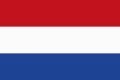
  
 
Netherlands Facts


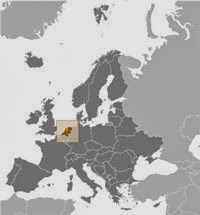
  • The Netherlands is also known as Holland.
  • The capital and largest city in the Netherlands is Amsterdam.
  • Other major cities include Rotterdam, the Hague, Eindhoven and Utrecht.
  • Around 20% of the Netherlands is located below sea level.
  • The Netherlands border Belgium and Germany.
  • The population of the Netherlands in 2013 was estimated to be around 17 million.
  • The main language in the Netherlands is Dutch.
  • The majority of Dutch people can speak more than one language.
  • The Netherlands is part of the European Union and uses the Euro as its currency.
  • The Netherlands also includes islands in the Caribbean named Bonaire, Sint Eustatius and Saba.
  • There are around 20 national parks in the Netherlands.
  • The Netherlands is a developed nation with strong exports in a number of industries.
  • Many of the world's tomatoes, cucumbers and flowers are exported from the Netherlands.
  • The Netherlands is a tolerant country with liberal policies.
  • Dutch drivers use the right-hand side of the road.
  • Vincent van Gogh is perhaps the most famous Dutch painter.
  • Dutch people enjoy a range of sports including football (soccer), swimming, volleyball, golf, tennis and hockey.
  
 
New Zealand Facts


  • New Zealand is located in the south-western Pacific Ocean and features two main islands, the North Island and the South Island, as well as other smaller ones.
  • Other smaller islands include Stewart Island, Waiheke Island, Chatham Island, Great Barrier Island and more, although many are uninhabited.
  • The capital city of New Zealand is Wellington while the largest city is Auckland.
    Other major cities include Christchurch, Hamilton and Dunedin.
  • The population of New Zealand was estimated to be around 4.5 million at the start of 2013.
  • The official spoken languages of New Zealand are English and te reo Maori, with English being the most widely used.
  • Maori are the indigenous Polynesian people of New Zealand.
  • The Maori name for New Zealand is Aotearoa.
  • The Treaty of Waitangi was signed in 1840 between the British and Maori, making New Zealand a colony of the British Empire.
  • In 1893 New Zealand became the first country in the world to give all women the right to vote.
  • Due to its isolation, New Zealand has developed unique animal and plant life.
  • The bird species of New Zealand are particularly diverse, including alpine parrots and ground dwelling Kiwis.
  • The term ‘Kiwi’ is also used as a nickname for a New Zealander.
  • The Lord of the Rings movies were filmed in New Zealand.
  • In New Zealand they drive on the left-hand side of the road.
  • Located in the South Island, the highest mountain in New Zealand is Aoraki Mount Cook which reaches 3,754 metres (12,316 ft) in height.
  • Dairy products are New Zealand’s highest earning exports.
  • Rugby is the most popular spectator sport in New Zealand but a variety of sports such as football (soccer), cricket, netball, golf and others are popular among participants.
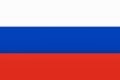
  
 
Russia Facts


  • The official name for Russia is the Russian Federation.
  • Russia shares borders with many countries, including China, Ukraine, North Korea and Norway.
  • In terms of land area, Russia is the largest country in the world.
  • Russia is located across 9 time zones.
  • At the beginning of 2013, Russia was estimated to have a population of around 143 million.
  • Russian is the official language of Russia but there are many other languages used in various parts of the country.
  • The capital and largest city in Russia is Moscow. Other major cities in Russia include Saint Petersburg, Yekaterinburg and Novosibirsk.
  • Russians drive on the right-hand side of the road.
  • The currency used in Russia is the ruble.
  • Russia has a wide range of natural resources and is one of the world’s largest producers of oil.
  • The world’s first satellite, named Sputnik, was launched by the Soviet Union in 1957.
  • The Soviet Union (USSR) was a socialist state that occupied much of northern Asia and eastern Europe from 1922 until it was dissolved in 1991. Former Soviet states include Lithuania, Georgia, Latvia, Ukraine, Kazakhstan and others.
  • The official residence of the Russian president is the Kremlin in Moscow. The name Kremlin means fortress.
  • Russia is one of 5 permanent members of the UN Security Council, along with the US, UK, China and France.
  • Russia has over 40 national parks and 100 wildlife reserves.
  • Lake Baikal is the largest freshwater lake in the world. It reaches 1642 metres (5,387 feet) in depth and contains around 20% of the world’s unfrozen fresh water.
  • Mount Elbrus is the highest mountain in Russia (and Europe), it reaches a height of 5642 metres (18,510 feet).
  • Russia’s Volga River is the longest in Europe, with a length of around 3690 kilometres (2293 miles).
  • Russia has the world’s largest area of forests.
  • Russia produces a large amount of renewable energy thanks to its well developed hydropower stations.
  • Moscow hosted the 1980 Summer Olympic Games.
  • Basketball, ice hockey and football (soccer) are popular sports in Russia.

 
Scotland Facts 


  • Scotland is located in Europe, at the northern end of Great Britain.
  • Scotland is a part on the United Kingdom, along with England, Wales and Northern Ireland.
  • Scotland shares a border with England.
  • Scotland includes over 700 islands. These include groups called Orkney, Shetland and the Hebrides.
  • The population of Scotland in 2011 was around 5.3 million.
  • The capital of Scotland is Edinburgh while the largest city is Glasgow. Other major cities include Aberdeen and Dundee.
  • Aberdeen has become an important centre for the oil industry after the finding of oil in the North Sea.
  • The highest mountain in Scotland is Ben Nevis which stands at a height of 1344 metres (4409 feet).
  • The Scottish Highlands are a mountainous region of Scotland with historical importance and a low population density.
  • Most major cities are located in the Scottish Lowlands.
  • A variety of wildlife can be found in Scotland, including seals, mountain hare, ptarmigan, stoats and the golden eagle.
  • Scotland has over 300 railway stations.
  • Scottish drivers use the left-hand side of the road.
  • Scotland has a unique culture with traditions such as bagpipes, kilts and highland dancing.
  • In 1872, Scotland played England in the first international game of football (soccer). The result was a 0-0 draw.
  • The thistle is a national symbol of Scotland.
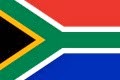
 
South Africa


  • The official name of South Africa is the Republic of South Africa.
  • South Africa is located at the southern end of Africa.
  • In 2011 the population of South Africa was around 52 million.
  • South Africa has three capital cities, Cape Town, Bloemfontein and Pretoria.
  • The largest city in South Africa is Johannesburg. Other major cities include Soweto and Durban.
  • South Africa has 11 official languages, including Zulu, Afrikaans, Xhosa and English.
  • South Africa has the largest economy of any African country.
  • South Africa has had an unsettled history, with apartheid policies made by the National Party enforcing a system of segregation from 1948 until 1994. Nelson Mandela was elected president in 1994 after South Africa’s first universal elections.
  • South Africa's coastline stretches over 2500 kilometres (1553 miles) in length.
  • South Africa is home to a wide variety of animals including giraffes, hippopotamus, leopards and lions.
  • Conservation is an important issue in South Africa. It has lost many natural habitats due to deforestation and overpopulation.
  • South Africa is a member of the United Nations.
  • South Africa has high unemployment.
  • The first human heart transplant was performed in a Cape Town hospital in 1967.
  • Cave paintings have been found in South Africa that date to around 75000 years ago.
  • Drivers use the left-hand side of the road in South Africa.
  • The most popular sports in South Africa are football (soccer), rugby and cricket.
  • In 2010 South Africa hosted the FIFA World Cup.
    
Spain Facts


  • The Spanish name for Spain is España.
  • The Spanish language is spoken in many areas of the world due to the early influence of the Spanish Empire.
  • Spain is located in Europe.
  • It is a developed country with a high quality of life.
  • The largest city and capital of Spain is Madrid.
  • The second largest city is Barcelona, which is located in Catalonia.
  • The population of Spain in 2012 was around 47 million.
  • The currency used in Spain is the Euro.
  • In Spain they drive on the right-hand side of the road.
  •  It is believed that modern humans first arrived in Spain around 32000 years ago.
  • Mount Teide is the highest mountain in Spain (3718 m, 12198 ft) and an active volcano.
  • The Pyrenees is a mountain range that divides Spain and France.
  • Spain includes a number of islands including Mallorca, Tenerife, Ibiza and Gran Canaria. Many can be found in the Canary Islands, an archipelago off the northwest coast of Africa.
  • The Spanish tourism industry is one of the largest in the world, bringing in billions of Euros into the Spanish economy.
  • Spain produces a large amount of renewable energy, including wind power and solar power.
  • Spain has a variety of foods and unique dishes such as paella (a type of rice dish) and tapas (a range of small snacks or appetizers).
  • Football (soccer) is the most popular sport in Spain.
  • The 1992 Summer Olympic Games were held in Barcelona.
  
United States Facts


  • The United States of America is also called the USA, US, United States or sometimes America.
  • On July 4, 1776, the Declaration of Independence was issued, establishing the United States of America.
  • The US is the 4th largest country in the world by land area and 3rd by population.
  • On February 25, 2013, the estimated population of the US was 315,568,000.
  • The US is a diverse country with a multicultural society.
  • The US has the world's largest economy.
  • The US developed the first nuclear weapons, using them on the Japanese cities of Hiroshima and Nagasaki near the end of World War 2.
  • The Mississippi and Missouri Rivers combine to form the longest river system in the US and the fourth longest in the world.
  • The tallest mountain the US is Mt McKinley, located in the state of Alaska it reaches 20,320 ft (6,194 m) above sea level.
  • Alaska was purchased from Russia in 1867 and is the largest state in the US by land area.
  • Hawaii is the most recent of the 50 states in the US (joining in 1959) and is the only one made up entirely of islands.
  • Most of the world's tornadoes occur in the Midwest region of the US known as Tornado Alley.
  • The most populated city in the US is New York City, followed by Los Angeles and Chicago.
  • English is the most commonly spoken language in the US, followed by Spanish.
  • The first man to walk on the moon was American Neil Armstrong (July 21, 1969).
  • The US was the leading force behind the development of the Internet.
  • The US consumes more petroleum than any other country in the world.
  • The most popular team sports in the US are American football, baseball, basketball and ice hockey.
  

Friday, April 9, 2010

Indian Railways

Railway zones

A schematic map of the Indian Railways network, showing the various zones.

The headquarters of the Indian Railways in New Delhi
Indian Railways is divided into zones, which are further sub-divided into divisions. The number of zones in Indian Railways increased from six to eight in 1951, nine in 1952, and finally 16 in 2003. Each zonal railway is made up of a certain number of divisions, each having a divisional headquarters. There are a total of sixty-seven divisions.
The Kolkata Metro is owned and operated by Indian Railways, but is not a part of any of the zones. It is administratively considered to have the status of a zonal railway.
Each of the sixteen zones, as well as the Kolkata Metro, is headed by a General Manager (GM) who reports directly to the Railway Board. The zones are further divided into divisions under the control of Divisional Railway Managers (DRM). The divisional officers of engineering, mechanical, electrical, signal and telecommunication, accounts, personnel, operating, commercial and safety branches report to the respective Divisional Manager and are in charge of operation and maintenance of assets. Further down the hierarchy tree are the Station Masters who control individual stations and the train movement through the track territory under their stations' administration.


Sl. No Name Abbr. Date Established Headquarters Divisions
1. Central CR 1951, November 5 Mumbai Mumbai, Bhusawal, Pune, Solapur, Nagpur
2. East Central ECR 2002, October 1 Hajipur Danapur, Dhanbad, Mughalsarai, Samastipur, Sonpur
3. East Coast ECoR 2003, April 1 Bhubaneswar Khurda Road, Sambalpur, Visakhapatnam
4. Eastern ER 1952, April Kolkata Howrah, Sealdah, Asansol, Malda
5. Konkan KR 1998, November 26 Navi Mumbai Ratnagiri, Madgaon, Karwar, Mangalore
6. North Central NCR 2003, April 1 Allahabad Allahabad, Agra, Jhansi
7. North Eastern NER 1952 Gorakhpur Izzatnagar, Lucknow, Varanasi
8. North Western NWR 2002, October 1 Jaipur Jaipur, Ajmer, Bikaner, Jodhpur
9. Northeast Frontier NFR 1958 Guwahati Alipurduar, Katihar, Lumding, Rangia, Tinsukia
10. Northern NR 1952, April 14 Delhi Delhi, Ambala, Firozpur, Lucknow, Moradabad
11. South Central SCR 1966, October 2 Secunderabad Secunderabad, Hyderabad, Guntakal, Guntur, Nanded, Vijayawada
12. South East Central SECR 2003, April 1 Bilaspur Bilaspur, Raipur, Nagpur
13. South Eastern SER 1955 Kolkata Adra, Chakradharpur, Kharagpur, Ranchi
14. South Western SWR 2003, April 1 Hubli Hubli, Bangalore, Mysore
15. Southern SR 1951, April 14 Chennai Chennai, Madurai, Palakkad, Salem, Tiruchchirapalli, Thiruvanathapuram
16. West Central WCR 2003, April 1 Jabalpur Jabalpur, Bhopal, Kota
17. Western WR 1951, November 5 Mumbai Mumbai Central, Vadodara, Ratlam, Ahmedabad, Rajkot, Bhavnagar


Recruitment and training

With approximately 1.6 million employees, Indian Railways is the country's single largest employer. Staff are classified into gazetted (Group A and B) and non-gazetted (Group C and D) employees. The recruitment of Group A gazetted employees is carried out by the Union Public Service Commission through exams conducted by it. The recruitment to Group 'C' and 'D' employees on the Indian Railways is done through 19 Railway Recruitment Boards which are controlled by the Railway Recruitment Control Board (RRCB). The training of all cadres is entrusted and shared between six centralised training institutes.

Subsidiaries


A WAP5 locomotive

A diesel locomotive of Indian Railways powering Express train, that runs in Assam
Indian Railways manufactures much of its rolling stock and heavy engineering components at its six manufacturing plants, called Production Units, which are managed directly by the ministry. As with most developing economies, the main reason for this was the policy of import substitution of expensive technology related products when the general state of the national engineering industry was immature. Each of these six production units is headed by a General Manager, who also reports directly to the Railway Board.
There exist independent organisations under the control of the Railway Board for electrification, modernisation and research and design, each of which is headed by a General Manager. A number of Public Sector Undertakings, which perform railway-related functions ranging from consultancy to ticketing, are also under the administrative control of the Ministry of railways.

 Technical details

 Track

Indian railways uses four gauges, the 1,676mm broad gauge which is wider than the 1,435mm standard gauge; the 1,000mm metre gauge; and two narrow gauge 762 mm (2 ft 6 in) and 610 mm (2 ft) . Track sections are rated for speeds ranging from 75 to 160 km/h.
The total length of track used by Indian Railways was about 111,600 km (69,300 mi) while the total route length of the network was 63,273 km (39,316 mi) on 31 March 2008. About 28% of the route-kilometre and 42% of the total track kilometre was electrified on 31 March 2008.

Broad gauge is the predominant gauge used by Indian Railways.
Broad gauge is the predominant gauge used by Indian Railways. Indian broad gauge—1,676 mm (5 ft 6 in)—is the most widely used gauge in India with 96,851 km of track length (86.8% of entire track length of all the gauges) and 51,082 km of route-kilometre (80.7% of entire route-kilometre of all the gauges) on 31 March 2008.
In some regions with less traffic, the metre gauge (1,000mm) is common, although the Unigauge project is in progress to convert all tracks to broad gauge. The metre gauge had 11,676 km of track length (10.5% of entire track length of all the gauges) and 9,442 km of route-kilometre (14.9% of entire route-kilometre of all the gauges) on 31 March 2008.
The Narrow gauges are present on a few routes, lying in hilly terrains and in some erstwhile private railways (on cost considerations), which are usually difficult to convert to broad gauge. Narrow gauges had a total of 2,749 route-kilometre on 31 March 2008. The Kalka-Shimla Railway, the Nilgiri Mountain Railway and the Darjeeling Himalayan Railway are three notable hill lines that use narrow gauge.
The share of broad gauge in the total route-kilometre has been steadily rising, increasing from 47% (25,258 route-km) in 1951 to more than 83% in 2010 whereas the share of metre gauge has declined from 45% (24,185 route-km) to less than 13% in the same period and the share of narrow gauges has decreased from 8% to 3%. However, the total route-kilometre has increased by only 18% (by just 10,000 km from 53,596 route-km in 1951) in the last 60 years. This compares very poorly with Chinese railways, which increased from about 27,000 route-km at the end of second world war to about 90,000 route-km in 2010, an increase of more than three-fold. More than 28,000 route-km (34% of the total route-km) of Chinese railway is electrified compared to only about 18,000 route-km of Indian railways. This is an indication of the poor state of Indian railways where the funds allocated to new railway lines are meagre, construction of new uneconomic railway lines are taken up due to political interference without ensuring availability of funds and the projects incur huge cost and time overruns due to poor project-management and paucity of funds.
Sleepers (ties) used are made of prestressed concrete, or steel or cast iron posts, though teak sleepers are still in use on few older lines. The prestressed concrete sleeper is in wide use today. Metal sleepers were extensively used before the advent of concrete sleepers. Indian Railways divides the country into four zones on the basis of the range of track temperature. The greatest temperature variations occur in Rajasthan, where the difference may exceed 70°C.

Traction

As of March 2008, 18,274 km of the total 63,273 km route length is electrified. Since 1960, almost all electrified sections on IR use 25,000 V AC traction through overhead catenary delivery. A major exception is the entire Mumbai section, which uses 1,500 V DC. and is currently undergoing change to the 25,000 V AC system. Another exception is the Kolkata Metro, which uses 750 V DC delivered through a third rail.
Traction voltages are changed at two places close to Mumbai. Central Railway trains passing through Igatpuri switch from AC to DC using a neutral section that may be switched to either voltage while the locomotives are decoupled and swapped. Western Railway trains switch power on the fly, in a section between Virar (DC) and Vaitarna (AC), where the train continues with its own momentum for about 30 m through an unelectrified section of catenary called a dead zone. All electric engines and EMUs operating in this section are the necessary AC/DC dual system type (classified "WCAM" by Indian Railways).

Services

Passenger


A DMU Train
Indian Railways operates about 9,000 passenger trains and transports 20 million passengers daily across twenty-eight states and two union territories. Sikkim, Arunachal Pradesh, and Meghalaya are the only states not connected by rail. A standard passenger train consists of eighteen coaches, but popular trains can have up to 24 coaches.

24 Coached Malwa Express
Coaches are designed to accommodate anywhere from 18 to 108 passengers, but during the holiday seasons and/or on busy routes, more passengers may travel in unreserved coaches. Most regular trains have coaches connected through vestibules. However, 'unreserved coaches' are not connected with the rest of the train via any vestibule.

An un-vestibulated coach of the Indian train
Reservation against cancellation service is a provision for shared berth in case the travel ticket is not confirmed.

Accommodation classes


An 'Open' type [3+3] Chair Car
Several long trains are composed of two to three classes of travel, such as a 1st and 2nd classes which have different pricing systems for various amenities. The 1st Class refers to coaches with separate cabins, coaches can be air-conditioned or non air-conditioned.

An AC 1 Class coach
Further, other AC classes can have 2 or 3 tier berths, with higher prices for the former, 3-tier non-AC coaches or 2nd class seating coaches, which are popular among passengers going on shorter journeys.
In air-conditioned sleeper classes passengers are provided with sheets, pillows and blankets. Meals and refreshments are provided, to all the passengers of reserved classes, either through the on-board pantry service or through special catering arrangements in trains without pantry car. Unreserved coach passengers have options of purchasing from licensed vendors either on board or on the platform of intermediate stops.
The amenities depend on the popularity and length of the route. Lavatories are communal and feature both the Indian style as well as the Western style.
The following table lists the classes in operation. Not all classes may be attached to a rake though.
Class Description
1A The First class AC: This is the most expensive class, where the fares are on par with airlines. Bedding is included with the fare in IR. This air conditioned coach is present only on popular routes between metropolitan cities and can carry 18 passengers. The coaches are carpeted, have sleeping accommodation and have privacy features like personal coupes.
2A AC-Two tier: Air conditioned coaches with sleeping berths, ample leg room, curtains and individual reading lamps. Berths are usually arranged in two tiers in bays of six, four across the width of the coach then the gangway then two berths longways, with curtains provided to give some privacy from those walking up and down. Bedding is included with the fare. A broad gauge coach can carry 48 passengers.
FC First class: Same as 1AC, without the air conditioning. This class is not very common.
3A AC three tier: Air conditioned coaches with sleeping berths. Berths are usually arranged as in 2AC but with three tiers across the width and two longways as before giving eight bays of eight. They are slightly less well appointed, usually no reading lights or curtained off gangways. Bedding is included with fare. It carries 64 passengers in broad gauge.
CC AC chair car: An air-conditioned seater coach with a total of five seats in a row used for day travel between cities.
EC Executive class chair car: An air-conditioned seater coach with a total of four seats in a row used for day travel between cities.
SL Sleeper class: The sleeper class is the most common coach, and usually ten or more coaches could be attached. These are regular sleeping coaches with three berths vertically stacked. In broad gauge, it carries 72 passengers per coach. Railways have modified certain Sleeper Coaches on popular trains to accommodate 81 passengers in place of regular 72 passengers. This was done in order to facilitate benefits like clear the Passenger rush and simultaneously earn more revenue. But this has got lukewarm response with criticism from the travellers and railways has decided to remove them.
2S Seater class: same as AC Chair car, but with bench style seats and without the air-conditioning.
G or UR General or Unreserved: The cheapest accommodation, with seats made of pressed wood and are rarely cushioned. Although entry into the compartment is guaranteed, a sitting seat is not guaranteed. Tickets issued are valid on any train on the same route if boarded within 24 hours of buying the ticket. These coaches are usually very crowded.

A typical sleeper class coach
At the rear of the train is a special compartment known as the guard's cabin. It is fitted with a transceiver and is where the guard usually gives the all clear signal before the train departs. A standard passenger rake generally has four general compartments, two at the front and two behind, of which one is exclusively for ladies. The exact number varies according to the demand and the route. A luggage compartment can also exist at the front or the back. In some trains a separate mail compartment is present. In long-distance trains a pantry car is usually included in the centre. A new class; Economy AC three tier is introduced in the Sealdah-New Delhi Duronto train.

Notable trains and achievements


A train on the Darjeeling Himalayan Railway
There are two UNESCO World Heritage Sites on IR — the Chatrapati Shivaji Terminus and the Mountain railways of India. The latter is not contiguous, but actually consists of three separate railway lines located in different parts of India:
  • The Darjeeling Himalayan Railway, a narrow gauge railway in West Bengal.
  • The Nilgiri Mountain Railway, a metre gauge railway in the Nilgiri Hills in Tamil Nadu.
  • The Kalka-Shimla Railway, a narrow gauge railway in the Shivalik mountains in Himachal Pradesh.
The Palace on Wheels is a specially designed train, frequently hauled by a steam locomotive, for promoting tourism in Rajasthan. On the same lines, the Maharashtra government introduced the Deccan Odyssey covering various tourist destinations in Maharashtra and Goa, and was followed by the Government of Karnataka which introduced the Golden Chariot train connecting popular tourist destinations in Karnataka and Goa. However, neither of them has been able to enjoy the popular success of the Palace on Wheels.
The Samjhauta Express is a train that runs between India and Pakistan. However, hostilities between the two nations in 2001 saw the line being closed. It was reopened when the hostilities subsided in 2004. Another train connecting Khokhrapar (Pakistan) and Munabao (India) is the Thar Express that restarted operations on February 18, 2006; it was earlier closed down after the 1965 Indo-Pak war. The Kalka Shimla Railway till recently featured in the Guinness Book of World Records for offering the steepest rise in altitude in the space of 96 kilometre.

A Beyer Garratt 6594 Engine seen at the National Rail Museum
The Lifeline Express is a special train popularly known as the "Hospital-on-Wheels" which provides healthcare to the rural areas. This train has a carriage that serves as an operating room, a second one which serves as a storeroom and an additional two that serve as a patient ward. The train travels around the country, staying at a location for about two months before moving elsewhere.
Among the famous locomotives, the Fairy Queen is the oldest operating locomotive in the world today, though it is operated only for specials between Delhi and Alwar. John Bull, a locomotive older than Fairy Queen, operated in 1981 commemorating its 150th anniversary. Kharagpur railway station also has the distinction of being the world's longest railway platform at 1,072 m (3,517 ft). The Ghum station along the Darjeeling Toy Train route is the second highest railway station in the world to be reached by a steam locomotive. The Mumbai–Pune Deccan Queen has the oldest running dining car in IR.
The Himsagar Express, between Kanyakumari and Jammu Tawi, has the longest run in terms of distance and time on Indian Railways network. It covers 3,745 km (2,327 mi) in about 74 hours and 55 minutes. The Bhopal Shatabdi Express is the fastest train in India today having a maximum speed of 150 km/h (93 mph) on the Faridabad–Agra section. The fastest speed attained by any train is 184 km/h (114 mph) in 2000 during test runs.
The Rajdhani Express and Shatabdi Express are the superfast, fully air-conditioned trains that give the unique opportunity of experiencing Indian Railways at its best. In July 2009, a new non-stop train service called Duronto Express was announced by the railway minister Mamata Banerjee.

Fares and ticketing

Fares on the Indian Railways across categories are among the cheapest in the world. In the past few years, despite a recessionary environment, the Indian Railways have not raised fares on any class of service. On the contrary, there has been a minor dip in fares in some categories.
Ticketing services are available at all major and minor railway stations across India. In 2003, Indian Railways launched online ticketing services through the IRCTC website. Apart from E-tickets, passengers can also book I-tickets that are basically regular printed tickets, except that they are booked online and delivered by post.

Tourism

IRCTC takes care of the tourism operations of the Indian Railways. The Indian Railways operates several luxury trains such as Palace on Wheels, Golden Chariot, Royal Orient Express and Deccan Odyssey; that cater mostly to foreign tourists. For domestic tourists too, there are several packages available that cover various important tourist and pilgrimage destinations across India.

Freight


A single line rail bridge
IR carries a huge variety of goods ranging from mineral ores, fertilizers and petrochemicals, agricultural produce, iron & steel, multimodal traffic and others. Ports and major urban areas have their own dedicated freight lines and yards. Many important freight stops have dedicated platforms and independent lines.
Indian Railways makes 70% of its revenues and most of its profits from the freight sector, and uses these profits to cross-subsidise the loss-making passenger sector. However, competition from trucks which offer cheaper rates has seen a decrease in freight traffic in recent years. Since the 1990s, Indian Railways has switched from small consignments to larger container movement which has helped speed up its operations. Most of its freight earnings come from such rakes carrying bulk goods such as coal, cement, food grains and iron ore.
Indian Railways also transports vehicles over long distances. Trucks that carry goods to a particular location are hauled back by trains saving the trucking company on unnecessary fuel expenses. Refrigerated vans are also available in many areas. The "Green Van" is a special type used to transport fresh food and vegetables. Recently Indian Railways introduced the special 'Container Rajdhani' or CONRAJ, for high priority freight. The highest speed notched up for a freight train is 100 kilometres per hour (62 mph) for a 4,700 metric tonne load.
Recent changes have sought to boost the earnings from freight. A privatization scheme was introduced recently to improve the performance of freight trains. Companies are being allowed to run their own container trains. The first length of an 11,000-kilometre (6,800 mi) freight corridor linking India's biggest cities has recently been approved. The railways has increased load limits for the system's 225,000 freight wagons by 11%, legalizing something that was already happening. Due to increase in manufacturing transport in India that was augmented by the increase in fuel cost, transportation by rail became advantageous financially. New measures such as speeding up the turnaround times have added some 24% to freight revenues.

Dedicated Freight Corridor

Ministry of Railways have planned to construct a new Dedicated Freight Corridor (DFC) covering about 2762 route km on two corridors, Eastern Corridor from Ludhiana to Sone Nagar and Western Corridor from Jawahar Lal Nehru Port Mumbai to Tughlakabad/Dadri along with interlinking of two corridors at Khurja. Upgrading of transportation technology, increase in productivity and reduction in unit transportation cost are the focus areas for the project.
“Dedicated Freight Corridor Corporation of India Limited (DFCC)” is a special purpose vehicle created to undertake planning & development, mobilization of financial resources and construction, maintenance and operation of the Dedicated Freight Corridors. DFCC has been registered as a company under the Companies Act 1956 on 30 October 2006.

Rail budget and finances


A sample ticket
The Railway Budget deals with planned infrastructure expenditure on the railways as well as with the operating revenue and expenditure for the upcoming fiscal years, the public elements of which are usually the induction and improvement of existing trains and routes, planned investment in new and existing infrastructure elements, and the tariff for freight and passenger travel. The Parliament discusses the policies and allocations proposed in the budget. The budget needs to be passed by a simple majority in the Lok Sabha (Lower House). The comments of the Rajya Sabha (Upper House) are non-binding. Indian Railways is subject to the same audit control as other government revenue and expenditures. Based on anticipated traffic and the projected tariff, requirement of resources for capital and revenue expenditure of railways is worked out. While the revenue expenditure is met entirely by railways itself, the shortfall in the capital (plan) expenditure is met partly from borrowings (raised by Indian Railway Finance Corporation) and the rest from Budgetary support from the Central Government. Indian Railways pays dividend to the Central Government for the capital invested by the Central Government.
As per the Separation Convention (on the recommendations of the Acworth Committee), 1924, the Railway Budget is presented to the Parliament by the Union Railway Minister, two days prior to the General Budget, usually around 26 February. Though the Railway Budget is separately presented to the Parliament, the figures relating to the receipt and expenditure of the Railways are also shown in the General Budget, since they are a part and parcel of the total receipts and expenditure of the Government of India. This document serves as a balance sheet of operations of the Railways during the previous year and lists out plans for expansion for the current year.
The formation of policy and overall control of the railways is vested in Railway Board, comprising the Chairman, the Financial Commissioner and other functional members of Traffic, Engineering, Mechanical, Electrical and Staff departments.
Indian Railways, which a few years ago was operating at a loss, has, in recent years, been generating positive cash flows and been meeting its dividend obligations to the government, with (unaudited) operating profits going up substantially. The railway reported a cash surplus of INR 9000 cr in 2005, INR 14000 cr in 2006, INR 20,000 cr in 2007 and INR 25,000 cr for the 2007-2008 fiscal year. Its operating ratio improved to 76% while, in the last four years, its plan size increased from INR 13,000 cr to INR 30,000 cr. The proposed investment for the 2008-2009 fiscal year is INR 37,500 cr, 21% more than for the previous fiscal year. Budget Estimates-2008 for Freight, Passenger, Sundry other Earnings and other Coaching Earnings have been kept at INR 52,700 cr, INR 21,681 cr, INR 5,000 cr and INR 2,420 cr respectively. Maintaining an overall double digit growth, Gross Traffic Earnings have been projected as INR 93,159 crore in 2009-10 (19.1 billion USD at current rate), exceeding the revised estimates for the current fiscal by INR 10,766 crore. Around 20% of the passenger revenue is earned from the upper class segments of the passenger segment (the air-conditioned classes).
The Sixth Pay Commission was constituted by the Government of India in 2005 to review the pay structure of government employees, and submitted its recommendations in April 2008. Based on its recommendations, the salaries of all Railways officers and staff were to be revised with retrospective effect w.e.f. January 1, 2006, resulting in an expenditure of over Rs. 13000 crore in 2008-09 and Rs. 14000 crore in 2009-10. Consequently, staff costs have risen from 44% of ordinary working expenses to 52%.

 Issues

Most of the railway stations are in gross disrepair, dirty, outdated and overcrowded. It is common to see passengers on trains hanging out windows and even on the roof creating safety problems. The interior of the trains are poorly maintained - "very dirty, broken seats, filthy toilets, loose wires tangled in the passageways, chipped paint, and the usual stinks." The railway has not yet been successful in addressing the overcrowding, cleanliness and other maintenance issues. Although accidents such as derailment and collisions are less common in recent times, many are run over by trains, especially in crowded areas. Indian Railways have accepted the fact that given the size of operations, eliminating accidents is an unrealistic goal, and at best they can only minimize the accident rate. Human error is the primary cause, leading to 83% of all train accidents in India. While accident rates are low - 0.55 accidents per million train kilometre, the absolute number of people killed is high because of the large number of people making use of the network. While strengthening and modernisation of railway infrastructure is in progress, much of the network still uses old signalling and has antiquated bridges. Lack of funds is a major constraint for speedy modernisation of the network, which is further hampered by diversion of funds meant for infrastructure to lower-prioritised purposes due to political compulsions. In order to solve this problem, the Ministry of Railways in 2001 created a non-lapsible safety fund of Rs. 17000 crore exclusively for the renewal of overaged tracks, bridges, rolling stock and signalling gear. In 2003, the Ministry also prepared a Corporate Safety Plan for the next ten years with the objective of realising a vision of an accident-free and casualty-free railway system. The plan, with and outlay of Rs. 31835 crore, also envisaged development of appropriate technology for higher level of safety in train operation.

Reforms and upgrades


One line Tunnel at Guntur division
Outdated communication, safety and signaling equipment, which used to contribute to failures in the system, is being updated with the latest technology. A number of train accidents happened on account of a system of manual signals between stations, so automated signaling is getting a boost at considerable expense. It is felt that this would be required given the gradual increase in train speeds and lengths, that would tend to make accidents more dangerous. In the latest instances of signaling control by means of interlinked stations, failure-detection circuits are provided for each track circuit and signal circuit with notification to the signal control centres in case of problems. Though currently available only in a small subset of the overall IR system, anti-collision devices are to be extended to the entire system. Aging colonial-era bridges and century-old tracks also require regular maintenance and upgrading.

Comparison of different gauges common in India with the standard one, which is not common in India
The fastest trains of Indian Railways, Rajdhani Express and Shatabadi Express face competition from low-cost airlines since they run at a maximum speed of only 150 kilometres per hour (93 mph). At least six corridors are under consideration for the introduction of high speed bullet trains to India with expert assistance from France and Japan.
IR is in the process of upgrading stations, coaches, tracks, services, safety, and security, and streamlining its various software management systems including crew scheduling, freight, and passenger ticketing. Crew members will be able to log in using biometric scanners at kiosks while passengers can avail themselves of online booking. Initially, various upgrade and overhaul work will be performed at more than five hundred stations, some of it by private contract. All metre gauge lines in the country will be converted to broad gauge (see Project Unigauge). New LHB stainless steel coaches, manufactured in India, have been installed in Rajdhani and Shatabdi express trains. These coaches enhance the safety and riding comfort of passengers besides having more carrying capacity, and in time will replace thousands of old model coaches throughout Indian Railways. More durable and conforming polyurethane paint is now being used to enhance the quality of rakes and significantly reduce the cost of repainting. Improved ventilation and illumination are part of the new scheme of things, along with the decision to install air brake systems on all coaches. New manufacturing units are being set up to produce state-of-the-art locomotives and coaches. IR is also expanding its telemedicine network facilities to further give its employees in far-flung and remote areas access to specialized medicine. IR has also piloted Internet connectivity on the Mumbai-Ahmedabad Shatabdi Express, powered by Techno Sat Communications It is estimated that modernisation of IR and bringing it up to international standards would require US$280 billion in new upgrades and investment from 2010 to 2020.
Sanitation in trains and stations throughout the system is getting more attention with the introduction of eco-friendly, discharge-free, green (or bio-) toilets developed by IIT Kanpur. Updated eco-friendly refrigerant is being used in AC systems while fire detection systems will be installed on trains in a phased manner. New rodent-control and cleanliness procedures are working their way into the many zones of IR. Central Railway's 'Operation Saturday' is gradually making progress, station by station, in the cleanup of its Mumbai division.
Augmentation of capacity has also been carried out in order to meet increasing demand. The number of coaches on each train have been increased to 24, from 16, which increased costs by 28% but increased revenues by 78%. The railways were permitted to carry 68 tons per wagon, up from the earlier limit of 54 tons per wagon, thereby cutting costs. The turnaround time for freight wagons was reduced from 7 days to 5 by operating the goods shed 24X7, electrifying every feeder line (this reduced time spent switching the engine from diesel to electric or from electric to diesel). Reducing the turnaround time meant that the Railways could now load 800 trains daily, instead of 550 trains daily. The minimum tonnage requirements were reduced allowing companies to unload their cargo at multiple stops